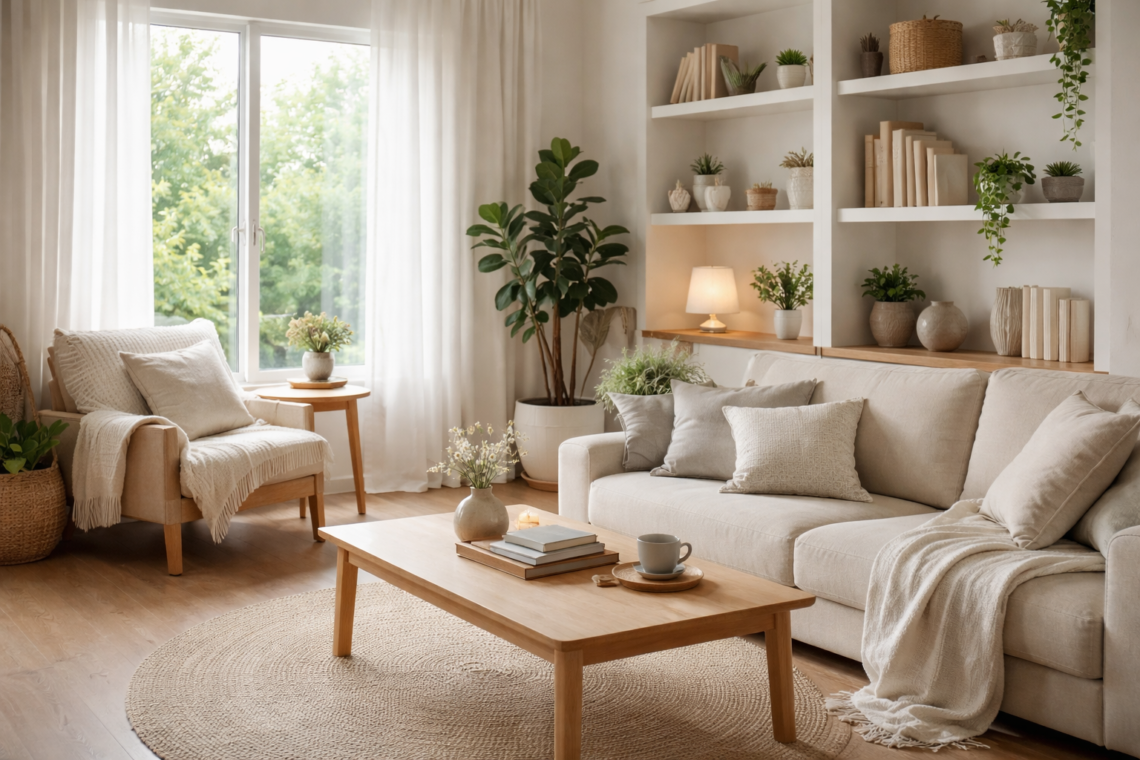
There’s a certain kind of relief that only an introvert truly understands—the kind that washes over you when you step into a space that is calm, quiet, and in order. Not just tidy for appearances, not just quiet by coincidence, but intentionally clean, intentionally peaceful, intentionally yours. For introverts, this isn’t some aesthetic preference or Pinterest-inspired dream. It’s a need. A real, grounding, sanity-saving need.
And yet, it’s one that often gets misunderstood.
From the outside, the desire for a clean, quiet, organized space can look like perfectionism, rigidity, or even a little bit of control-freak energy. But from the inside? It’s survival. It’s how we regulate our energy in a world that constantly pulls at it.
The World Is Loud (Even When It’s “Quiet”)
Introverts aren’t just people who like being alone. That’s the simplified version. The deeper truth is that introverts process stimulation more intensely. Sounds, visuals, conversations, clutter—these don’t just pass through unnoticed. They linger. They stack. They demand energy.
Think of it like this: every item out of place, every background noise, every flickering light is a tiny tab open in the brain. One or two? Manageable. Twenty or thirty? Suddenly your mental browser is lagging, overheating, and you can’t figure out why you feel so drained.
A cluttered space isn’t just messy—it’s mentally loud.
That pile of mail on the counter? It’s not just paper. It’s unfinished tasks, decisions waiting to be made, a subtle hum of “don’t forget about me.” The dishes in the sink? A quiet nudge of obligation. The random items scattered across a room? Visual interruptions that keep your brain from ever fully settling.
For an introvert, this constant low-level stimulation is exhausting.
Clean Space, Clear Mind (But Make It Personal)
You’ve probably heard the phrase “clean space, clear mind.” It gets tossed around a lot, sometimes to the point of sounding cliché. But for introverts, it lands differently—because it’s not about being neat for the sake of productivity or appearances.
It’s about creating a space where your mind can finally exhale.
A clean space reduces decision fatigue. You’re not constantly scanning, sorting, or subconsciously organizing. You’re just… existing. And that’s where introverts thrive—in environments that don’t demand constant engagement.
But here’s the key: “clean” doesn’t mean sterile or minimalist in the Instagram sense. It means intentional.
Maybe your version of organized includes neatly stacked books, a cozy blanket, and a few meaningful objects that make you feel grounded. Maybe it’s a desk with only what you need and nothing more. The common thread isn’t perfection—it’s clarity. Everything has a place, and nothing is screaming for your attention.
Silence Isn’t Empty—It’s Restorative
Let’s talk about quiet, because this one gets misunderstood even more.
Silence isn’t awkward for introverts. It isn’t something to fill or fix. It’s where we recharge.
In a noisy environment—whether it’s actual sound or just constant activity—introverts are always “on” in some way. Processing, filtering, reacting. Even if we’re not actively participating, our brains are still working overtime.
Quiet spaces give us a break from that.
It’s not about hating noise or people. It’s about needing moments where nothing is being asked of us. No conversations to track, no background chatter to tune out, no sudden interruptions pulling us out of our thoughts.
In those quiet moments, something really important happens: our minds reset.
We can think more clearly. We can reconnect with ourselves. We can process emotions that got pushed aside in busier, louder settings. Without that quiet, things start to build up—and eventually, they spill over as overwhelm, irritability, or burnout.
Organization as Emotional Regulation
For introverts, organization isn’t just practical—it’s deeply emotional.
When your external environment is in order, it creates a sense of internal stability. It’s one less layer of chaos to manage. One less thing pulling at your already limited social and mental energy.
And when things feel out of control in other areas of life? A clean, organized space can feel like an anchor.
It’s a place where you know where everything is. A place where nothing surprises you. A place where you don’t have to be “on.” That kind of predictability is incredibly soothing for an introvert’s nervous system.
It’s not about controlling everything—it’s about having one space that doesn’t feel overwhelming.
The Energy Economy of an Introvert
Introverts live with a different kind of energy economy.
Every interaction, every outing, every obligation has a cost. That doesn’t mean we don’t enjoy them—we do. But we also need to recover from them. And the environment we return to plays a huge role in how quickly (and fully) that recovery happens.
Imagine coming home after a long day of socializing or just being out in the world.
Option one: You walk into a cluttered, noisy, chaotic space. There’s stuff everywhere, maybe the TV is on, maybe there’s no clear place to sit and unwind. Your brain doesn’t get the signal to relax—it stays in that same heightened state.
Option two: You walk into a space that’s calm, quiet, and organized. The lighting is soft. Everything is in its place. There’s no immediate demand on your attention. Your shoulders drop. Your breathing slows. You feel it instantly.
That difference? It’s everything.
It’s Not About Being “High Maintenance”
Sometimes introverts hesitate to claim this need because it can feel… excessive. Like we’re asking for too much. Like we should just be able to “deal with it” the way others seem to.
But needing a calm, organized space isn’t high maintenance. It’s self-awareness.
Extroverts recharge through stimulation—being around people, activity, noise. Introverts recharge through the opposite. Neither is better or worse. They’re just different.
The problem is that the world is often designed with extroversion in mind—open offices, constant communication, background noise everywhere. So when introverts create quiet, organized spaces, it’s not indulgent. It’s corrective.
It’s balance.
Creating Your Own Sanctuary
The good news is that you don’t need a perfectly curated home or hours of free time to create this kind of space. Small shifts can make a big difference.
Start with one area—a corner, a desk, a chair by a window. Clear it. Simplify it. Make it a place where your brain doesn’t have to work so hard.
Pay attention to sound. Even subtle changes—like turning off background noise or using soft, ambient sounds—can change how a space feels.
Be intentional about what you keep around you. Not everything needs to be visible or accessible at all times. Give your mind the gift of less.
And most importantly, don’t feel guilty for needing this.
The Bottom Line
For introverts, clean, quiet, organized spaces aren’t about aesthetics or control—they’re about well-being. They’re how we recover, reset, and reconnect with ourselves in a world that rarely slows down.
So if you’ve ever felt that deep, almost physical sense of relief when your space is finally in order and the noise fades away—that’s not just preference.
That’s your nervous system saying, “Thank you. This is what I needed.”
References
- Quiet: The Power of Introverts in a World That Can’t Stop Talking by Susan Cain
- The Highly Sensitive Person by Elaine N. Aron
- American Psychological Association — Research on stress, environment, and mental well-being
- Princeton University Neuroscience Institute — Studies on how clutter affects focus and cognitive processing
- National Institute of Mental Health — Information on sensory processing and mental health

