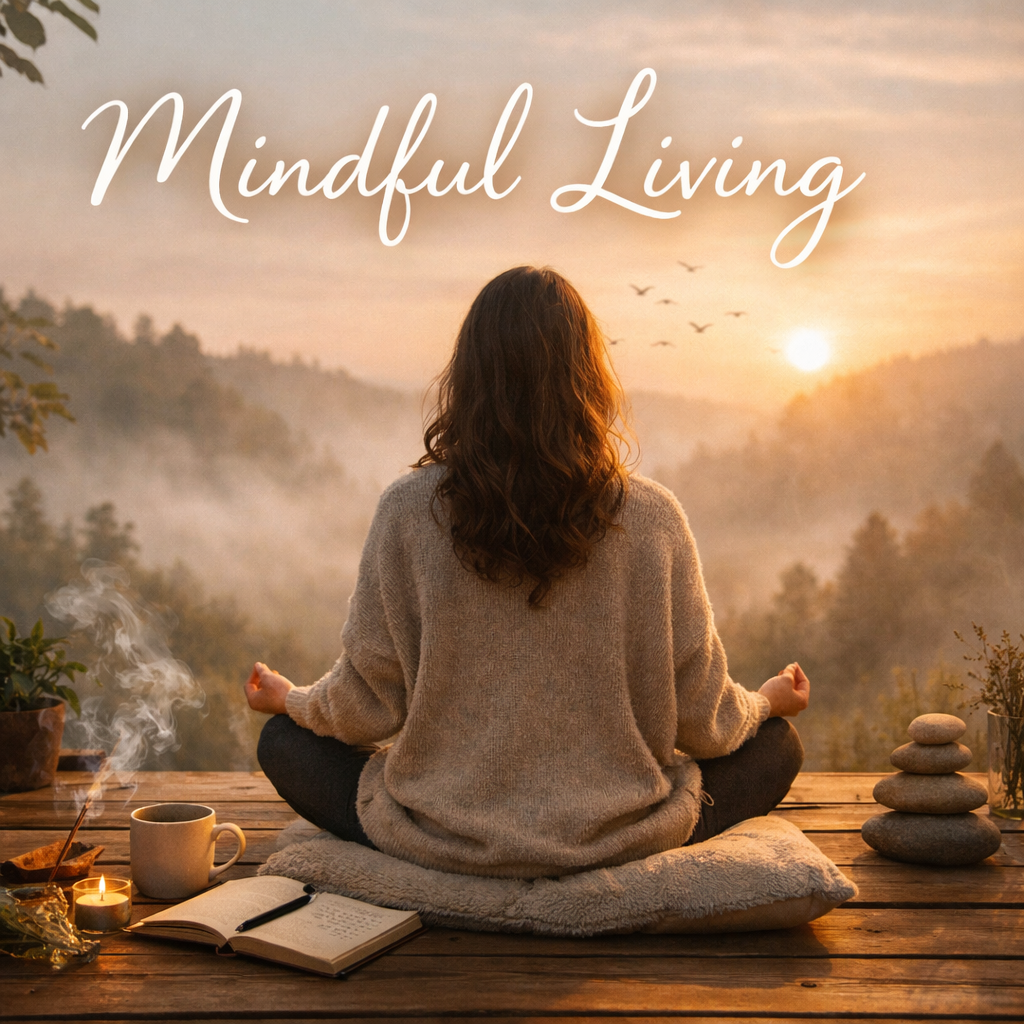
In the fast-paced world we live in, where constant connectivity and multitasking have become the norm, the concept of mindful living has gained significant attention. But let’s be honest—most of us aren’t trying to “achieve enlightenment.” We’re just trying to get through the day without feeling overwhelmed, scattered, or completely drained.
That’s where mindful living quietly steps in.
Mindful living isn’t about perfection or sitting cross-legged for hours in silence (unless you want to). It’s about learning how to be present in your own life—without constantly replaying the past or worrying about what’s next. It’s a softer, steadier way of moving through the world, and for those of us who already feel everything a little more deeply, it can be a game-changer.
What is mindful living?
At its core, mindful living is the practice of being aware of your thoughts, feelings, sensations, and surroundings in the present moment—without immediately judging or trying to fix them. And that “without judgment” part? That’s usually the hardest.
Because if you’re anything like me, your brain has opinions. Constant ones.
But mindfulness gently teaches you to notice those thoughts instead of getting pulled into them. Over time, that space between “thought” and “reaction” becomes where your peace lives.
Key Elements of Mindful Living
- Present Moment Awareness. Mindful living emphasizes the importance of being fully present in each moment. This involves letting go of distractions, worries about the future, or dwelling on the past. By focusing on the present, individuals can savor life’s simple pleasures and appreciate the richness of each experience.
- Non-Judgmental Observation. Practicing mindfulness involves observing thoughts and emotions without attaching judgment. Rather than labeling experiences as good or bad, individuals learn to acknowledge them with curiosity and acceptance. This non-judgmental attitude fosters a compassionate understanding of oneself and others.
- Mindful Breathing. Central to many mindfulness practices is the awareness of breath. Mindful breathing involves paying attention to the inhalation and exhalation, using the breath as an anchor to the present moment. This simple yet powerful technique can help alleviate stress and promote a sense of calm.
- Intentional Living. Mindful living encourages intentional decision-making. It involves being conscious of one’s values and aligning actions with those values. This may include making choices that prioritize well-being, foster positive relationships, and contribute to personal growth.
Why is mindful living important?
Mindful living is important because it can help you break free from the cycle of negative emotions, such as anxiety, anger, sadness, or guilt, that often arise from dwelling on the past or worrying about the future. By focusing on the present moment, you can learn to accept yourself and your situation without resisting or avoiding them. Mindful living can also help you cultivate gratitude, compassion, and kindness, which can improve your relationships with yourself and others.
What are some benefits of mindful living?
Mindful living can have many benefits for your well-being, such as:
- Reducing stress and anxiety. By focusing on the present moment, you can avoid getting caught up in negative thoughts and emotions that often arise from dwelling on the past or worrying about the future. This can help you lower your cortisol levels, which are associated with stress and anxiety, and increase your serotonin levels, which are associated with happiness and relaxation.
- Improving your mood and self-esteem. By practicing mindfulness, you can learn to accept yourself and your situation as they are, without resisting or avoiding them. This can help you develop a more positive and realistic self-image and reduce feelings of shame, guilt, or inadequacy. You can also cultivate gratitude, compassion, and kindness, which can boost your mood and self-esteem.
- Enhancing your physical health. Mindfulness can have positive effects on your physical health, such as lowering your blood pressure, improving your immune system, reducing inflammation, and alleviating chronic pain. Mindfulness can also help you adopt healthier habits, such as eating mindfully, exercising regularly, and sleeping better.
- Increasing your focus and creativity. Mindfulness can help you improve your attention span, concentration, memory, and learning abilities. By being more present and aware, you can filter out distractions and process information more efficiently. Mindfulness can also stimulate your creativity by allowing you to explore new ideas and perspectives without judgment or fear of failure.
How can you practice mindful living?
Mindful living is not something that you do occasionally but a way of being that you can integrate into your daily life. Here are some tips to help you practice mindful living:
- Start your day with a mindful intention. Before you get out of bed, take a few moments to set an intention for the day. For example, you can say to yourself, “Today, I will be mindful of my breath,” or “Today, I will be kind to myself and others.” This can help you start your day with a positive and purposeful mindset.
- Pay attention to your breath. Your breath is a powerful tool to anchor you in the present moment. Whenever you feel stressed, distracted, or overwhelmed, take a few deep and slow breaths, and notice how your chest and abdomen rise and fall. This can help you calm your mind and body and reconnect with yourself.
- Do one thing at a time. Multitasking may seem like a way to save time and get more done, but it can make you less productive and more stressed. Instead of trying to do several things at once, focus on one task at a time, and give it your full attention. For example, when you are eating, just eat; when you are working, just work; when you are talking to someone, just listen. This can help you enjoy what you are doing more and do it better.
- Be mindful of your senses. One of the easiest ways to practice mindful living is to pay attention to your senses: sight, hearing, smell, taste, and touch. Whenever you have a chance, take a moment to notice what you see, hear, smell, taste, and feel in your environment. For example, you can admire the colors of the sky, listen to the sounds of nature, smell the fragrance of flowers, savor the flavor of food, or feel the warmth of the sun. This can help you appreciate the beauty and richness of life.
- Practice mindfulness meditation. Mindfulness meditation is a formal practice of mindful living that involves sitting quietly and observing your breath, thoughts, feelings, sensations, and surroundings with an open and curious attitude. You can practice mindfulness meditation for as little as 10 minutes a day or as long as you like. There are many apps and online resources that can guide you through mindfulness meditation exercises. Mindfulness meditation can help you train your mind to be more focused, aware, and compassionate.
Mindful living also has a way of changing how time feels. When you’re constantly rushing, everything blends together—days feel short, weeks disappear, and you’re left wondering where all your time went. But when you slow down, even slightly, life starts to feel more spacious.
You notice things you used to miss. Small things. Quiet things.
And strangely, those are often the moments that matter the most.
Another subtle shift happens in how you handle discomfort. Instead of immediately trying to escape stress, boredom, or difficult emotions, mindfulness encourages you to sit with them—just for a moment. Not forever. Just long enough to understand what’s actually going on beneath the surface.
And more often than not, those feelings lose some of their power when you stop fighting them.
For introverts, this way of living can feel especially natural. It creates space—mentally and emotionally—to process, reflect, and recharge. It’s not about withdrawing from the world but about engaging with it in a way that doesn’t leave you feeling depleted.
Final Thoughts
In a world filled with constant distractions and demands, mindful living provides a valuable counterbalance. Embracing mindfulness allows individuals to cultivate a sense of inner peace, navigate challenges with resilience, and lead a more fulfilling life. By incorporating mindful practices into daily routines, one can embark on a transformative journey towards holistic well-being.
Mindful living is a simple yet powerful way to transform your life for the better. By practicing mindfulness, you can live more fully, happily, and peacefully in the present moment.
References
- Jon Kabat-Zinn (1994). Wherever You Go, There You Are: Mindfulness Meditation in Everyday Life.
- American Psychological Association. (n.d.). Mindfulness-based stress reduction and health benefits.
- Mayo Clinic. (n.d.). Meditation: A simple, fast way to reduce stress.
- Harvard Health Publishing. (n.d.). Mindfulness meditation may ease anxiety and mental stress.
- Thich Nhat Hanh (1975). The Miracle of Mindfulness.